

Posted by Biomatstores.com on 7th Aug 2026
10 Mistakes People Make When Buying a Therapy Mat (And How to Avoid Them)
Shopping for a therapy mat should be simple.
Unfortunately, it isn't.
Search Google for "therapy mat" and you'll find everything from $25 acupressure mats to $3,000 premium infrared therapy mats—all using the same words to describe products that have almost nothing in common.
It's no wonder buyers become confused.
One website tells you to buy the cheapest therapy mat you can find. Another recommends a massage mat. Another promotes a red light therapy mat. Then someone else insists that a far infrared therapy mat is the only option worth considering.
Who's right?
The truth is that none of those answers are universally correct.
The biggest mistake people make isn't choosing the wrong brand.
It's buying the wrong type of therapy mat.
After helping customers compare therapy mats for years, we've noticed the same mistakes happening over and over again. Fortunately, they're easy to avoid once you know what to look for.
Here are the ten most common mistakes—and how to make sure you don't make them.

Mistake #1: Buying the Cheapest Therapy Mat You Can Find
Everyone likes saving money.
But buying the least expensive therapy mat simply because it's the least expensive usually leads to disappointment.
Why?
Because "therapy mat" isn't a single product.
It's an entire category.
Buying a $40 exercise mat instead of a premium infrared therapy mat isn't saving money if what you actually wanted was heat-based wellness. Likewise, spending thousands of dollars on an infrared therapy mat doesn't make sense if all you needed was a comfortable surface for stretching.
The better question isn't:
"What's the cheapest therapy mat?"
It's:
"Which therapy mat actually matches what I want to do?"
Once you answer that question, comparing prices becomes much more meaningful.
Mistake #2: Assuming Every Therapy Mat Does the Same Thing
This is probably the biggest misunderstanding in the entire therapy mat market.
People hear the words therapy mat and assume they're all variations of the same product.
They're not.
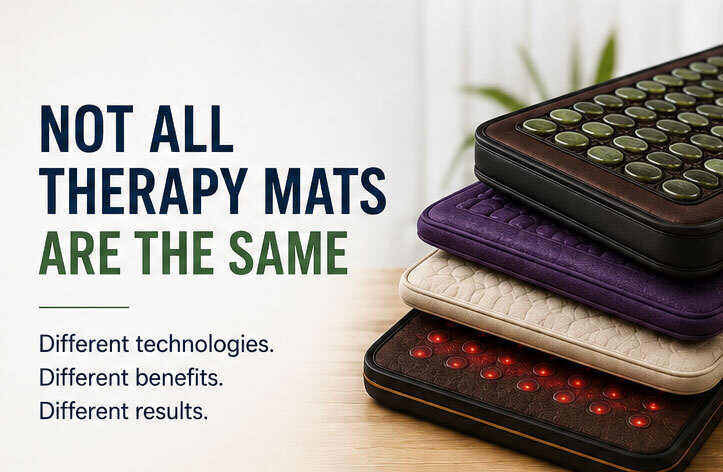
Today's therapy mats generally fall into several very different categories:
- Infrared therapy mats
- Heated therapy mats
- Massage therapy mats
- Red light therapy mats
- PEMF mats
- Acupressure mats
- Exercise and rehabilitation mats
Each category exists for a different purpose.
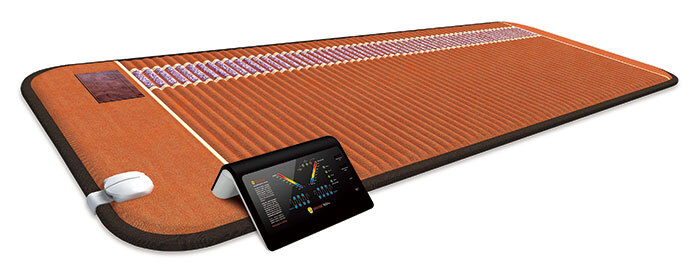
For example, someone researching the Richway Biomat® is shopping within the premium far infrared therapy mat category.
Comparing that product directly with an acupressure mat or a simple foam exercise mat doesn't tell you which one is "better."
It's like comparing hiking boots with running shoes.
Both are footwear.
Both have value.
But they're designed for completely different jobs.
Understanding the category you're shopping in is the first step toward making a smart purchase.
Mistake #3: Buying the Wrong Size Therapy Mat
Many buyers spend hours comparing features while overlooking something surprisingly basic:
How much therapy mat do they actually need?
Ask yourself a few simple questions.
- Will you primarily lie down?
- Will you use it while sitting?
- Do you travel frequently?
- Do you want full-body coverage?
- Will it stay in one room?
- Will multiple people use it?
These answers matter.
Someone looking for a travel-friendly option has very different needs than a wellness professional outfitting a treatment room.
This is one reason products like the Richway Biomat® Mini and the full-size Professional Richway Biomat® both exist.
They aren't competing with each other.
They're designed for different lifestyles.
Choosing the right size often makes a bigger difference than choosing between two similar brands.

Mistake #4: Ignoring What's Inside the Therapy Mat
Most shoppers compare therapy mats the same way they compare televisions.
They look at photographs.
Maybe they compare dimensions.
Perhaps they glance at a list of features.
Very few ask:
"How is this therapy mat actually built?"
Construction matters.
Premium therapy mats frequently invest more heavily in engineering than appearance.
Questions worth asking include:
- What materials are used?
- How many layers make up the construction?
- How is heat distributed?
- How durable are the electronics?
- Who manufactures the product?
- How long has the company been building therapy mats?
Take the Richway Biomat® as an example.
Its patented panel heating system and 17-layer construction represent engineering decisions that most shoppers never see in product photos but that can influence long-term ownership.
Whether you're comparing the Richway Biomat® or another premium infrared therapy mat, understanding construction tells you far more than simply comparing color or appearance.
Mistake #5: Forgetting to Check the Warranty
Many therapy mats contain electronics.
That means the warranty deserves just as much attention as the features list.
Yet it's surprising how many buyers never read it.
Instead, they focus entirely on the purchase price.
Before buying any therapy mat, ask:
- How long is the warranty?
- Who actually provides it?
- Are replacement parts available?
- Can repairs be made if necessary?
- Is customer support located where you can reach it?
Warranty coverage often reveals how confident a manufacturer is in its own product.
For example, the Richway Biomat® includes a three-year limited warranty and Lifetime Care Program. The important difference is that Lifetime Care does not wait until the warranty is over: eligible Biomat owners gain access to reduced-cost replacement beginning in month 13, giving buyers a defined path forward if the mat eventually needs to be replaced.
That doesn't automatically make it the right therapy mat for everyone.
It does illustrate why support after the sale deserves just as much attention as features before the sale.
Remember, a therapy mat isn't simply something you buy.
Ideally, it's something you'll continue using for years.
Thinking about long-term ownership before you purchase can prevent disappointment later.
Mistake #6: Ignoring Customer Support
Here's a question almost nobody asks before buying a therapy mat:
"Who do I call if I need help?"
Ironically, this often becomes one of the most important questions after the purchase.
Many therapy mats include electronic controllers, heating systems, timers, remote controls, or other components that may eventually require assistance. Even something as simple as understanding temperature settings or replacing a controller becomes much easier when knowledgeable customer support is available.
Unfortunately, some online marketplaces are excellent at selling products—but far less helpful after the transaction is complete.
Before purchasing, ask yourself:
- Can I actually reach a knowledgeable person?
- Does the seller specialize in this product?
- Will they still be available years from now?
- Can they answer technical questions?
- Can they help if replacement parts are ever needed?
This is one reason many buyers prefer purchasing premium therapy mats through established, authorized dealers rather than anonymous online sellers.
Support may not seem important on the day your therapy mat arrives.
It becomes very important if you ever need it.

Mistake #7: Buying From Unauthorized Sellers
Not every website selling a therapy mat has the same relationship with the manufacturer.
That distinction matters.
Authorized dealers are typically able to provide accurate product information, warranty guidance, and ongoing customer support.
Unauthorized sellers may simply be reselling inventory with little knowledge of the product itself.
When shopping for a premium product such as the Richway Biomat®, verifying that you're purchasing through an authorized distributor helps ensure you're receiving an authentic product along with the support that accompanies it.
Before purchasing any premium therapy mat, consider asking:
- Is this seller authorized?
- Will the manufacturer's warranty apply?
- Who provides customer support?
- Where do repairs or replacement parts come from?
Those questions take less than five minutes to answer—and may save you considerable frustration later.
Mistake #8: Falling for Marketing Buzzwords
The wellness industry loves impressive-sounding phrases.
You'll frequently encounter descriptions such as:
- Medical Grade
- Professional Quality
- Clinical Strength
- Hospital Grade
- Advanced Technology
- Revolutionary Design
None of those phrases automatically tell you whether a therapy mat is well built.
Instead of asking whether the marketing sounds impressive, ask questions that have meaningful answers.
- How long has the company been manufacturing therapy mats?
- What technology does the mat actually use?
- What warranty is provided?
- Is customer support available?
- What makes this product different from others in the same category?
Good companies are usually happy to answer those questions with specific information rather than advertising slogans.
Mistake #9: Thinking Price Equals Value
One of the biggest misconceptions in the therapy mat market is that the lowest price automatically represents the best value—or that the highest price automatically represents the best product.
Neither assumption is true.
Value comes from receiving the right product for the way you intend to use it.
Imagine buying an inexpensive exercise mat when what you really wanted was a premium infrared therapy mat.
You saved money.
But you didn't solve your problem.
Now imagine buying a premium therapy mat with advanced technology when all you wanted was a comfortable place to stretch.
You spent more money than necessary.
Again, the product wasn't the problem.
The match between product and purpose was.
This is why experienced buyers often compare value instead of price.
For example, many people considering the Richway Biomat® don't evaluate it solely by its purchase price. They also consider its engineering, construction, warranty, long-term support, and expected ownership experience.
Whether those features justify the investment depends entirely on what the individual buyer is looking for.
That's the definition of value.
Mistake #10: Buying Before Asking One Simple Question
If you've read this far, you've probably noticed something.
Almost every mistake on this list could have been avoided by answering one question first.
What do I actually want my therapy mat to do?
That question changes everything.
If your answer is:
- "I want something comfortable for stretching."
You're probably shopping for an exercise or rehabilitation mat.
- "I enjoy massage."
A massage therapy mat may make the most sense.
- "I want heat while I relax."
A heated therapy mat or premium far infrared therapy mat may be worth exploring.
- "I travel constantly."
Portability becomes one of your highest priorities.
The point is simple.
The best therapy mat isn't the one with the longest feature list.
It isn't the cheapest.
It isn't even the most expensive.
It's the one you'll actually use.
Therapy Mat Buyer's Checklist
Before purchasing any therapy mat, ask yourself the following questions:
- ☐ What type of therapy mat do I actually need?
- ☐ How often will I realistically use it?
- ☐ Do I want heat?
- ☐ Do I want massage?
- ☐ Is portability important?
- ☐ Will multiple people use it?
- ☐ What warranty is included?
- ☐ Is the seller authorized?
- ☐ What customer support is available?
- ☐ Does the technology match my goals?
If you can confidently answer every question on this checklist, you'll already be ahead of most therapy mat shoppers.
Final Thoughts
Buying a therapy mat shouldn't feel confusing.
Yet because the term covers everything from simple exercise mats to sophisticated premium infrared therapy mats, many shoppers unknowingly compare products that were never intended to compete with one another.
The goal isn't finding the best therapy mat.
The goal is finding your best therapy mat.
That means understanding the different categories, asking better questions, looking beyond marketing claims, researching construction quality, evaluating warranties, and purchasing from companies that will continue supporting you after the sale.
If your research ultimately leads you toward the premium far infrared therapy mat category, products such as the Richway Biomat® deserve careful consideration alongside other products in that class.
But regardless of which category you choose, avoiding these ten common mistakes will dramatically improve your chances of making a purchase you'll still be happy with years from now.
Because the smartest therapy mat purchase isn't the one that costs the least.
It's the one you never regret making.
Frequently Asked Questions About Therapy Mats
What is a therapy mat?
A therapy mat is a broad category of products designed to support relaxation, stretching, exercise, massage, heat therapy, or other wellness routines. Different therapy mats use different technologies, so understanding the category is the first step toward choosing the right one.
What is the best therapy mat?
The best therapy mat depends entirely on your goals. Someone looking for a simple stretching surface will likely choose something very different than someone researching a premium far infrared therapy mat. Matching the product to your intended use is more important than comparing price alone.
Are all therapy mats the same?
No. Therapy mats include exercise mats, massage mats, heated therapy mats, red light therapy mats, PEMF mats, acupressure mats, and premium infrared therapy mats. Although they share the same general name, they are designed for different purposes.
How much should I spend on a therapy mat?
Prices vary widely because therapy mats serve different functions. Rather than starting with price, determine what you want the mat to do. Once you've narrowed the category, comparing quality, construction, warranty, and long-term value becomes much easier.
Should I buy a heated therapy mat or an infrared therapy mat?
They are different categories of products. Heated therapy mats use conventional heating elements, while infrared therapy mats are designed around far infrared technology. Understanding the differences between the two will help you decide which better fits your needs.
Why is warranty important when buying a therapy mat?
Many therapy mats contain electronic components. A strong warranty, responsive customer support, and access to replacement parts can become just as important as the features listed on the product page.
Should I buy a therapy mat from Amazon or an authorized dealer?
When purchasing premium therapy mats, many buyers prefer authorized dealers because they can provide product knowledge, warranty guidance, and long-term customer support. Before purchasing, verify that the seller is authorized by the manufacturer whenever possible.
Where does the Richway Biomat® fit into the therapy mat market?
The Richway Biomat® is considered a premium far infrared therapy mat. It is best compared with other products in that category rather than with massage mats, acupressure mats, or basic exercise mats, since each type serves a different purpose.