
Posted by BiomatStores.com on 28th Feb 2026
How to Create a Relaxation Corner in Your Home
Not everyone has space for a home gym, a yoga studio, or a dedicated meditation room.
But almost everyone has space for something smaller — and surprisingly powerful.
A relaxation corner.
A small, intentional space designed for one purpose: unplugging from the day.
In a world full of notifications, deadlines, and constant stimulation, more people are carving out quiet corners of their homes where the only goal is to slow down.
And the best part? You don’t need a renovation or a big budget to create one.
What Is a Relaxation Corner?
A relaxation corner is a small, dedicated area in your home designed for quiet time, comfort, and intentional rest. It typically includes soft lighting, comfortable seating or floor cushions, calming textures, and minimal distractions.
Think of it as the opposite of a workspace.
No screens. No productivity pressure. Just space to reset.
Why More Homes Are Adding Wellness Spaces
Over the past few years, homes have become more than places to sleep.
They’ve become offices.
Gyms.
Classrooms.
Entertainment hubs.
With so much activity happening under one roof, many people are now intentionally designing spaces for the one thing modern homes often lack:
Quiet.
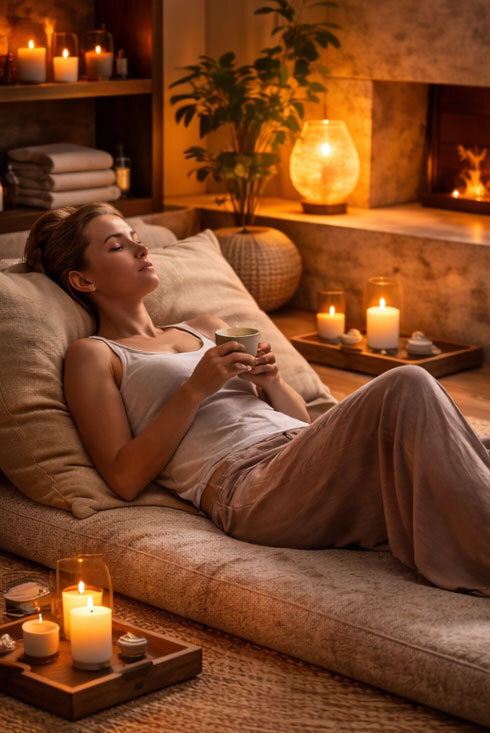
A relaxation corner creates a visual and mental boundary that signals: this is where I slow down.
Step 1: Choose the Right Spot
Your relaxation corner does not need to be large.
It just needs to feel separate from your daily activity zones.
Great locations include:
- An unused corner of a bedroom
- A quiet section of the living room
- A window nook
- A spare room corner
- A reading nook space
Even a 4x4 foot area can work beautifully.
The goal is intention — not square footage.
Step 2: Focus on Comfortable Grounding Pieces
Comfort is the foundation of any relaxation space.
Start with one or two core items:
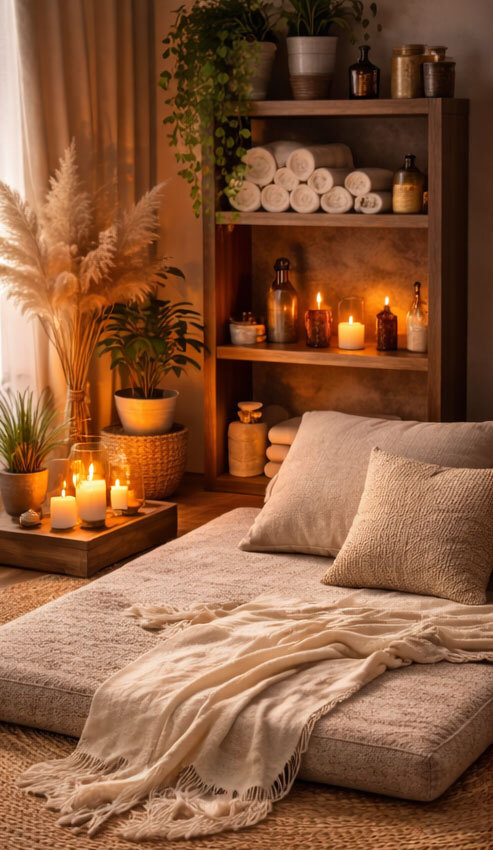
- A thick floor cushion or padded mat
- A chaise lounge or recliner
- A cozy reading chair
- A layered rug setup
The key is choosing something that invites you to sit or lie down and stay awhile.
Step 3: Use Lighting to Set the Mood
Lighting can completely change how a space feels.
Bright overhead lights signal activity.
Soft, warm lighting signals rest.
Consider adding:
- Warm table lamps
- Salt lamps
- Candles or flameless candles
- String lights
Lighting should feel gentle and calming rather than energizing.
Step 4: Add Natural Textures
Texture plays a powerful role in making a space feel cozy and inviting.
Popular materials include:
- Linen blankets
- Knit throws
- Wool rugs
- Wood accents
- Ceramic décor
Layering textures creates a space that feels warm and welcoming.
Step 5: Bring in Plants and Natural Elements
Natural elements help soften a room and create a peaceful atmosphere.
Easy additions:
- Houseplants
- Dried florals
- Small indoor trees
- Stone or wood décor
Even one plant can change the feel of a space.
Step 6: Remove Digital Distractions
This may be the most important step.
A relaxation corner works best when it is a screen-free zone.
No laptops.
No work emails.
No notifications.
This creates a mental association: this space equals downtime.
Step 7: Make It Part of a Daily Ritual
A relaxation corner only works if it gets used.
Many people build simple daily habits around their space:
- Morning quiet time
- Midday reset breaks
- Evening wind-down routines
- Reading time
- Reflection or journaling
Consistency turns a corner into a ritual.
Why Small Spaces Create Big Lifestyle Changes
Sometimes the smallest changes have the biggest impact.
A chair in the right corner.
A lamp with warm light.
A blanket that invites you to pause.
These small signals remind you to step away from constant activity and create moments of intentional rest.
And over time, those moments add up.
The Takeaway
You don’t need an entire room to create a wellness space.
You just need a corner and a little intention.
A relaxation corner becomes a visual reminder to slow down, unplug, and recharge in the middle of busy days.
Sometimes the most powerful home upgrade isn’t a renovation.
It’s a quiet place to sit and breathe.
Frequently Asked Questions
How much space do I need for a relaxation corner?
Even a small corner of a room can work. The goal is comfort and intention, not size.
What furniture works best in a relaxation corner?
Comfortable seating such as floor cushions, lounge chairs, recliners, or layered rugs work well.
Should a relaxation corner be screen-free?
Yes. Removing screens helps create a stronger mental association with downtime.
How often should I use my relaxation corner?
Many people use their space daily for short breaks, quiet time, or evening wind-down routines.