

Posted by BiomatStores.com on 29th May 2026
The Wellness Graveyard: 25 Products That Were Supposed to Change Your Life
The wellness industry is full of products that arrive with huge promises. They show up in ads, influencer videos, morning routine posts, gift guides, and “life-changing” product roundups. For a while, everyone seems to be talking about them.
Then, six months later, many of those same products are sitting in a drawer, a closet, a garage, or a storage bin.
That is the wellness graveyard.
It is filled with products people bought with good intentions but stopped using because they were inconvenient, uncomfortable, overhyped, hard to maintain, poorly made, or simply did not fit into real life.
The question is not just “what wellness products are popular?” The better question is:
Which wellness products actually become part of someone’s life?
Why So Many Wellness Products Get Abandoned
Most people do not abandon wellness products because they stop caring about feeling better. They abandon them because the product asks too much from them.
A wellness product is much more likely to fail when it requires:
- Too much setup
- Too much cleanup
- Too much space
- Too much daily discipline
- Too much discomfort
- Too much belief without enough noticeable experience
- Too many replacement parts, subscriptions, or accessories
The products that survive are usually different. They are simple. They are comfortable. They fit into routines people already have. They do not require someone to become a completely different person in order to use them.
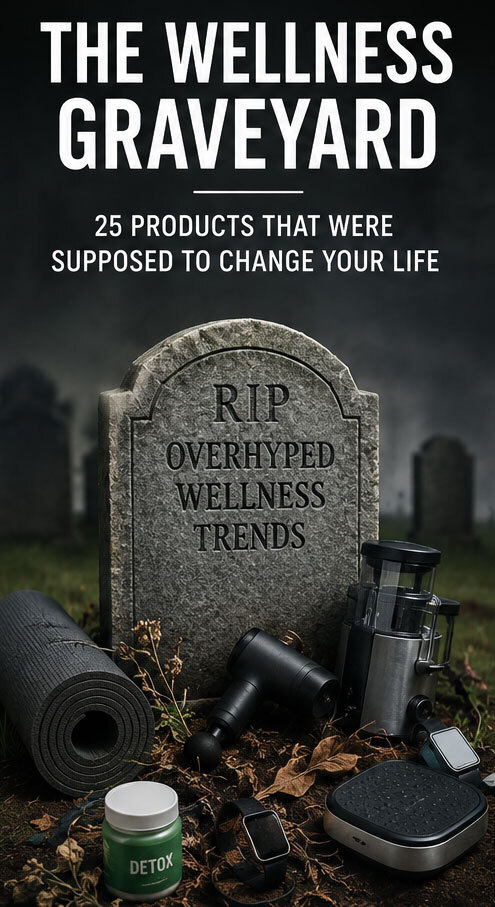
25 Wellness Products That Often End Up in the Wellness Graveyard
1. The Complicated Juicer
Juicers sound great in theory. Fresh juice. More produce. A healthier morning routine. But many people discover that juicing requires buying produce constantly, chopping ingredients, cleaning multiple parts, and dealing with pulp.
The problem is not the concept. The problem is friction. If the cleanup takes longer than the habit, the habit usually loses.
2. The Treadmill That Became a Clothes Rack
Treadmills are one of the most famous residents of the wellness graveyard. People buy them with serious motivation, but the machine often becomes furniture once the novelty fades.
The lesson is simple: a product that depends entirely on willpower has to compete with fatigue, schedules, stress, and real life.
3. The Massage Gun Nobody Charges Anymore
Massage guns exploded because they feel powerful and immediate. But many people stop using them because they are loud, aggressive, require effort, and are easy to forget once the initial excitement wears off.
A wellness product can be effective in the moment and still fail as a routine.
4. The Vibration Plate
Vibration plates promise a lot, but many people struggle to understand exactly how to use them consistently. They also take up space, feel awkward, and often become another device someone planned to use “every day” but did not.
5. The Detox Foot Bath
Few categories show the danger of wellness hype better than detox foot baths. The visual experience can be dramatic, but many consumers eventually become skeptical of what they are actually seeing and whether the product deserves a permanent place in their routine.
6. The Waist Trainer
Waist trainers became popular because they promised visible change with minimal effort. But discomfort, unrealistic expectations, and temporary results caused many people to abandon them.
A product that people dread using rarely survives long-term.
7. The Ice Bath Tub Used Twice
Cold exposure has passionate supporters, but the home ice bath is not realistic for everyone. It can require space, water management, temperature control, cleaning, and a willingness to be deeply uncomfortable.
For some people, that becomes empowering. For many others, it becomes a very expensive container.
8. The Red Light Mask
Red light masks became a social media favorite because they look futuristic and photograph well. But many users stop because the routine feels awkward, results are hard to judge, or the product becomes one more thing to remember.
9. The Cheap Infrared Mat
Low-cost infrared mats often attract buyers with the promise of a premium wellness experience at a bargain price. But many cheaper mats use basic wire-style heating systems, lower-grade materials, weaker construction, limited EMF information, and inconsistent heat patterns.
When the experience feels uneven, underwhelming, or poorly built, the product often stops being used.
10. The Sauna Blanket That Feels Like Work
Sauna blankets can be useful for some people, but they often involve sweating, wiping down surfaces, changing clothes, showering afterward, and storing the blanket. For buyers who wanted easy relaxation, the process can feel like another chore.
11. The Foam Roller Everyone Knows They Should Use
Foam rollers are inexpensive and simple, but they require active effort. Many people buy them, use them aggressively for a week, then avoid them because the experience is uncomfortable or boring.
12. The Balance Board
Balance boards are fun at first. Then the learning curve, safety concerns, and limited use cases cause many to disappear into closets.
13. The Smart Water Bottle
A water bottle that reminds you to drink sounds helpful. But if the app disconnects, the charging becomes annoying, or the bottle is harder to clean than a normal one, the “smart” feature becomes a liability.
14. The Sleep Tracker That Creates More Anxiety
Sleep trackers can provide interesting data, but some people become more stressed by the score than helped by the insight. A wellness product should support the routine, not make someone feel like they failed before the day begins.
15. The Posture Corrector
Posture correctors are often bought with hope and abandoned because they are uncomfortable, restrictive, or unrealistic to wear consistently.
16. The Expensive Supplement Stack
Supplements are one of the easiest wellness categories to overbuy. Many people build complicated routines with powders, capsules, tinctures, and subscriptions, then abandon them because the system becomes too confusing or expensive.
17. The Blue Light Glasses Bought in Panic
Blue light glasses became popular as screen time increased. Some people love them, but others stop using them because the benefit feels unclear, the glasses are inconvenient, or they already wear prescription eyewear.
18. The Air Purifier That Never Gets a Filter Change
Air purifiers can be valuable, but they only work as intended when maintained. Many people buy them, run them for months, and forget about filter replacements.
The product survives only if the maintenance habit survives.
19. The Essential Oil Diffuser
Diffusers became popular as part of the home wellness boom. But cleaning, refilling, scent fatigue, and concerns around pets or sensitivities can cause them to fall out of use.
20. The At-Home Facial Device
Many at-home beauty devices promise spa-like results, but they often require consistency, patience, and technique. If results are not obvious quickly, the device often gets abandoned.
21. The Weighted Hula Hoop
Weighted hula hoops had a viral moment because they looked fun and easy. But novelty-driven products often struggle after the first few uses.
22. The Mini Stepper
Mini steppers seem like the perfect small-space exercise solution. But the movement can feel repetitive, limited, and boring, which makes long-term use difficult for many buyers.
23. The Wellness App Subscription Nobody Opens
Meditation apps, habit apps, workout apps, fasting apps, and sleep apps can be helpful, but subscription fatigue is real. A product that lives behind another monthly charge has to earn attention constantly.
24. The Biohacking Gadget That Needed Too Much Explaining
Some wellness devices fail because buyers never fully understand what they are supposed to feel, track, or expect. If a product requires too much belief and too little practical experience, it can lose people quickly.
25. The Product Bought for the Fantasy Version of Yourself
This may be the most common one.
People often buy wellness products for the version of themselves who wakes up early, stretches every day, meal preps, meditates, journals, exercises, and never skips routines.
But the best wellness products are not built for fantasy lives. They work because they fit into real ones.
The Pattern: Why Wellness Products Fail
The products in the wellness graveyard usually fail for one of five reasons:
- Too much effort: They require too many steps to use consistently.
- Too much discomfort: People dread using them.
- Too little clarity: Buyers do not know what they should feel or expect.
- Too much hype: Marketing creates expectations the product cannot match.
- Too little integration: The product does not fit into daily life.
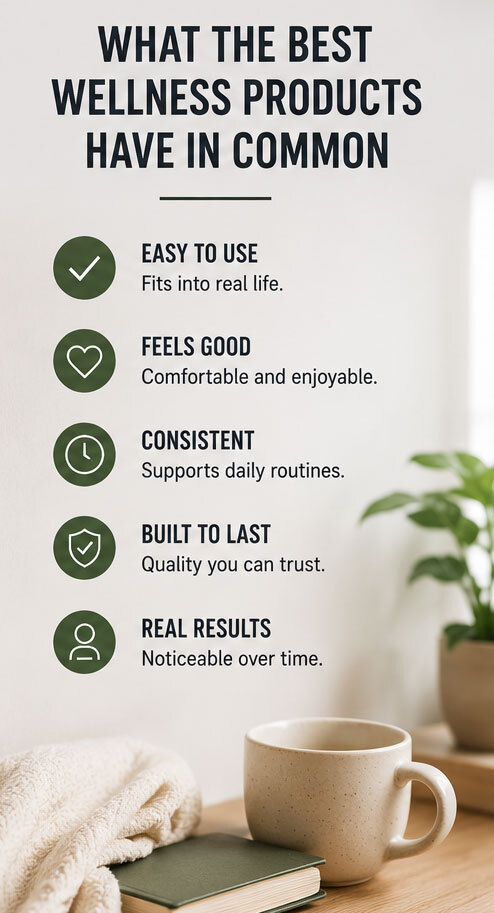
What the Best Wellness Products Have in Common
The wellness products that survive usually share a few traits.
- They are easy to use regularly.
- They feel good enough that people want to return to them.
- They do not require a complicated setup.
- They support relaxation, comfort, or recovery routines people already value.
- They are built well enough to justify long-term ownership.
- They do not depend entirely on novelty.
That is the real difference between a wellness product someone tries and a wellness product someone keeps.
Why Heat-Based Wellness Has Lasted
Many wellness trends disappear because they are complicated or uncomfortable. Heat-based wellness has lasted because warmth is simple, familiar, and easy to understand.
People have used warmth for comfort and relaxation for generations. Hot baths, heated stones, saunas, warm compresses, and heated surfaces all speak to the same basic human preference: warmth helps people slow down.
Modern far infrared technology builds on that familiar experience with a more advanced form of radiant heat.
Where the Richway Biomat Fits In
The Richway Biomat is not a viral gadget built around novelty. It is a long-standing infrared wellness system designed for repeated use, comfort, and consistency.
Unlike many cheap infrared mats, the Richway Biomat uses panel-based heating technology designed to heat the full surface more evenly, including the amethyst layer. That matters because the experience should feel consistent, not patchy or random.
The Biomat is also known for:
- Premium amethyst and tourmaline materials
- Far infrared heat
- Negative ion technology
- EMF protection
- Professional-grade construction
- Long-term use in wellness clinics and professional settings
The Biomat is FDA-cleared for the temporary relief of minor muscle and joint pain, stiffness, minor joint pain associated with arthritis, muscle spasms, and temporary increase in local circulation where applied.
The Real Lesson of the Wellness Graveyard
The wellness graveyard teaches one important lesson:
The best wellness product is not always the newest, loudest, cheapest, or trendiest.
The best wellness product is the one that earns a place in your routine.
If you are going to invest in a wellness product, look for something that is comfortable enough to use, simple enough to repeat, durable enough to last, and trusted enough to keep coming back to.
That is why many long-term users and wellness professionals continue choosing the Biomat®.
In a market full of products that come and go, the Biomat® has remained one of the most trusted names in infrared wellness for a reason.
Explore Premium Biomat® Infrared Wellness Products