
Posted by Biomatstores.com on 12th Jun 2026
Your Body Wasn’t Designed for Modern Life
Most people think they are tired because they are getting older.
But what if that is not the real problem?
What if your body is reacting exactly the way it was designed to react to an environment it was never designed to live in?
Modern life changed faster than the human body could adapt.
For most of human history, people moved constantly. They spent time outdoors. Their days followed natural light patterns. Their nervous systems experienced periods of stimulation followed by periods of genuine recovery.
Now compare that to modern life:
- 8 to 10 hours sitting indoors
- Constant notifications
- Artificial light late into the night
- Screens inches from our faces
- Chronic stress
- Minimal physical movement
- Very little true quiet
- Constant mental stimulation
- Sleep routines that barely exist
Then people wonder why they feel exhausted, overstimulated, tense, foggy, restless, and disconnected from their own bodies.
The truth is, many people are not broken.
They are overloaded.
Your Brain Was Never Meant to Process This Much Input
For most of human evolution, the brain processed real-world survival information:
- movement
- weather
- conversation
- food
- physical surroundings
- natural danger
Now the average person processes:
- emails
- social media
- texts
- advertisements
- news alerts
- work notifications
- streaming content
- constant background noise
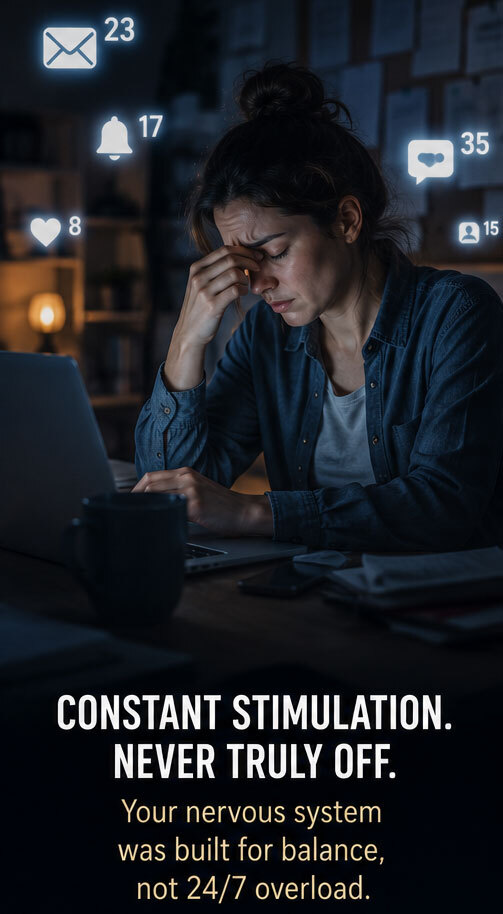
The nervous system rarely gets a true break.
Even relaxation has become stimulation.
People scroll themselves to sleep while wondering why their brain never feels quiet.
Your Body Was Built to Move, Not Sit Still All Day
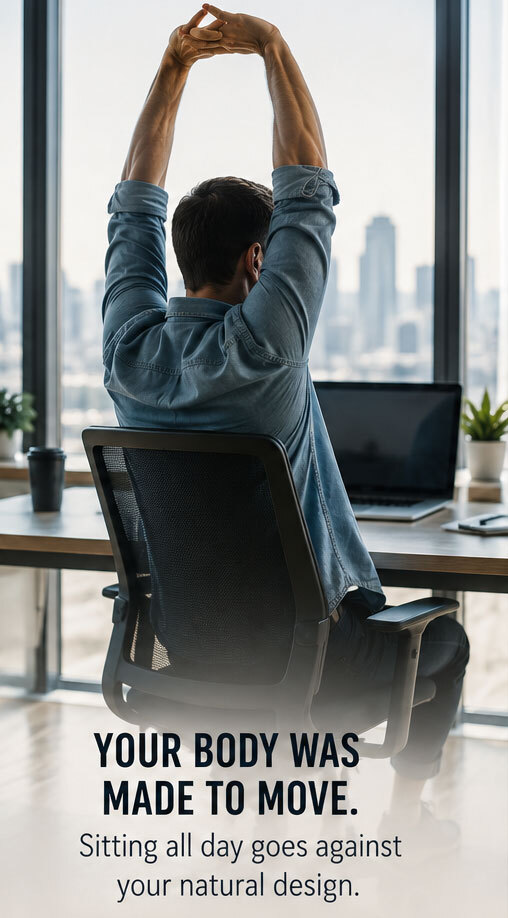
The human body evolved around movement.
Walking. Squatting. Reaching. Carrying. Climbing. Standing. Stretching.
Modern life replaced much of that with:
- desk chairs
- cars
- couches
- screens
- office lighting
Many people now spend most of their waking hours in physically unnatural positions.
That matters because the body does not separate physical stress from emotional stress as neatly as people think.
Long periods of sitting, tension, poor posture, and minimal movement can leave people feeling stiff, drained, uncomfortable, and mentally fatigued.
Artificial Light Quietly Changed Human Recovery
For thousands of years, human sleep patterns followed natural light.
Morning light signaled wakefulness.
Darkness signaled recovery.
Now people sit under artificial light all day, then stare into bright screens late into the night while expecting the body to transition naturally into deep rest.
That constant exposure can disrupt the body’s natural rhythm and make it harder to mentally slow down before sleep.
This is one reason so many people feel simultaneously exhausted and wired.
Modern Stress Never Fully Turns Off
Stress used to come in waves.
Now many people experience low-level stress almost constantly.
Not always dramatic stress.
Just constant pressure:
- deadlines
- notifications
- financial stress
- commuting
- information overload
- social comparison
- being reachable 24/7
The body was designed to recover after stress.
Modern life often removes the recovery part.
People stay mentally “on” from the moment they wake up until the moment they try to fall asleep.
We Removed Most Natural Recovery Rituals From Daily Life
Historically, people had built-in transitions between activity and rest.
Walking home. Sitting around fires. Quiet evenings. Physical labor followed by recovery.
Modern life blurred all of that together.
Now many people:
- work until bedtime
- scroll until sleep
- eat while distracted
- never fully disconnect
- rarely experience true stillness
The body often receives stimulation all day without clear signals that recovery has begun.
Why So Many People Feel Tired All the Time
This is why so many people describe themselves with phrases like:
- “I’m exhausted all the time.”
- “I can’t shut my brain off.”
- “I feel burned out.”
- “I wake up tired.”
- “I feel older than I should.”
- “I don’t recover like I used to.”
For many people, the issue is not one catastrophic health event.
It is years of accumulated overstimulation, under-recovery, poor sleep, minimal movement, and nervous system overload.
The Wellness Industry Often Makes This Worse
Many wellness products are marketed as quick fixes for modern exhaustion.
Buy this gadget.
Take this supplement.
Track this score.
Optimize this metric.
But many people do not actually need more stimulation.
They need more recovery.
That is a completely different mindset.
Why Heat-Based Wellness Has Survived for Centuries
Many wellness trends disappear because they are complicated, uncomfortable, unrealistic, or built entirely around novelty.
Heat-based wellness has survived because warmth is simple, familiar, and deeply connected to relaxation.
Across generations and cultures, people have consistently used:
- warm baths
- heated stones
- saunas
- warm compresses
- heated resting spaces
Warmth naturally encourages the body to slow down.
That is one reason heat-focused wellness routines continue to survive while many wellness trends come and go.
Why More People Are Creating Recovery Spaces at Home
Modern life creates so much stimulation that many people are now intentionally building spaces designed for the opposite experience.
Not productivity spaces.
Recovery spaces.
Quiet lighting. Less noise. Comfortable environments. Relaxation-focused routines. Spaces designed to help the nervous system downshift instead of stay activated.
This is one reason home wellness has grown so dramatically in recent years.
People are trying to recreate something modern life removed:
consistent recovery.
Where Far Infrared Wellness Fits In
Far infrared wellness products are not magic solutions to modern stress or exhaustion.
But many people use them as part of a broader relaxation and recovery routine designed to help create periods of intentional stillness and comfort.
The Richway Biomat is FDA-cleared for the temporary relief of minor muscle and joint pain, stiffness, minor joint pain associated with arthritis, muscle spasms, and temporary increase in local circulation where applied.
For many long-term users, the value is not only the warmth itself.
It is the routine.
Stepping away from screens.
Lying down.
Slowing breathing.
Disconnecting from stimulation.
Creating an environment where the body finally gets permission to recover.
Your Body Is Not Failing You
One of the biggest misconceptions in modern wellness is that exhaustion automatically means weakness.
Sometimes exhaustion is simply feedback.
A body designed for movement, rhythm, recovery, sunlight, rest, and stillness is trying to function inside an environment filled with:
- constant stimulation
- constant sitting
- constant information
- constant stress
- constant artificial input
No wonder so many people feel overwhelmed.
The Goal Is Not Perfection. It Is Balance.
Nobody is escaping modern life completely.
But small changes matter:
- more movement
- less screen exposure before bed
- better sleep routines
- more intentional recovery
- quiet spaces
- relaxation rituals
- moments of real stillness
The body responds surprisingly well when it finally gets opportunities to recover consistently.
The Bottom Line
Your body was not designed for nonstop stimulation.
It was designed for rhythm.
Movement and recovery.
Stress and rest.
Activity and stillness.
Modern life often removed the second half of those equations.
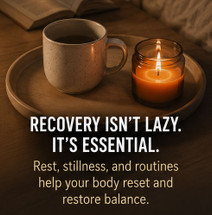
That is why recovery has become one of the most important forms of wellness in the modern world.
Because sometimes the healthiest thing a person can do is not push harder.
It is finally giving the body a chance to slow down.
Explore Biomat® Far Infrared Wellness Products